This article is part of our guide: What Is IGP? Tracking, Obedience and Protection Explained.
IGP Tracking: Why Calm Work Matters More Than Speed
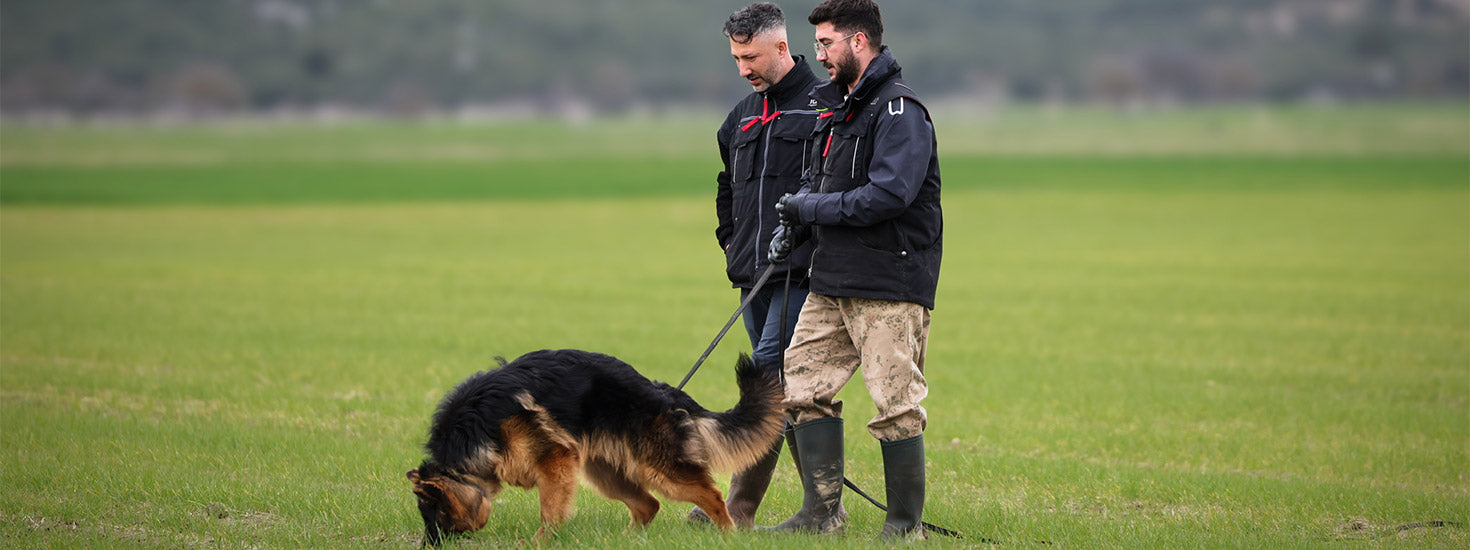
To many newcomers, IGP tracking looks unspectacular at first. The dog works a laid track with a deep nose, works out the corners and indicates articles. No loud action, no visible drive forward, no fast movement.
And that is exactly why tracking is often underestimated.
Tracking is not about the dog getting over the track somehow. The dog should work calmly, independently and with concentration. You recognise good tracking work by a dog that does not search hectically, does not constantly look back at the handler and does not work straight over the articles.
The dog has to understand that the track is its job. The handler accompanies the dog, but does not solve the track for it.
Why Article Indication Is So Important in IGP Tracking
The articles are a central point in IGP tracking. They are not just small interruptions on the track; they show whether the dog is working cleanly, with concentration and with intent.
Many problems arise because article indication is built too late or too imprecisely. The dog does learn to follow the track, but clarity is missing at the article. It overshoots the article, picks it up, lies down crooked or indicates only half-heartedly.
Later this turns into a training problem that often takes considerable effort to correct.
That is why it is worth building the indication behaviour separately and repeatably. The IQ Article Trainer 2.0 is made for exactly this: calm, precise and consistent article indication in tracking work, without unconscious body cues from the handler. It matches the size of IGP trial articles, the original articles can be attached directly to it, and thanks to the metal construction with screw-in spikes it can be used on fields, grass, concrete or indoors.
This way the article does not become part of the track by chance, but a separate training element the dog genuinely understands.
Why the Start of the Track Sets the Tone
The start of the track is often underestimated as well. Yet it frequently decides whether the dog settles calmly into the work or becomes hectic from the outset.
An unclear start quickly creates restlessness: the dog pushes forward, searches with its nose too high, waits for handler assistance or is more occupied with anticipation than with genuine scent work. That is why clear routines matter so much in tracking training.
The IQ Tracking Flag fits exactly into this context. It is a stable, weatherproof and clearly visible marker for tracking work in IGP training and helps make clean routines on the track more repeatable. It is made of stainless steel, carries a galvanised logo and is 54 cm long.
That alone does not turn a track into a good track. But it helps to set the frame cleanly. And it is details like these that make training clearer over the long term. Part of a calm routine is having articles, reward and line within reach on your body instead of searching for them at the start of the track; which carrying setup suits that is covered in dog training belts compared.
Typical Problems When Building IGP Tracking
Many beginners want too much too quickly. The track gets longer, the corners get harder, the ageing time increases, but the foundation is not yet stable.
The result is dogs that cover a lot of ground without really working cleanly. They drift from side to side, become hectic, lose the track or search more for confirmation than for the track itself.
Another mistake is too much influence from the handler. If you constantly steer, slow or rescue the dog, it never learns to solve problems on its own. It becomes dependent.
Good tracking therefore needs more than diligence. It needs a system: calm repetitions, clear criteria and a dog that understands what it is meant to do.
Five Common Beginner Mistakes in IGP Tracking
1. Progressing Too Quickly
The dog is sent onto difficult tracks before calmness and accuracy are established.
2. Articles Are Trained Only in Passing
Article indication has to be a clear behaviour, not something that happens by chance on the track.
3. Too Much Help from the Handler
Constant handler input prevents true independence.
4. A Hectic Start of the Track
A restless start makes calm tracking work considerably harder.
5. Lack of Repeatability
Without a clear structure, the dog cannot reliably tell which behaviour is wanted.
Final Thoughts: Good Tracking Is Built on Clarity
IGP tracking is not a side issue. It demands calmness, concentration, independence and a clean build-up.
If you take article indication seriously early and structure the start of the track clearly, you save a great deal of correction work later. Training aids such as the IQ Article Trainer 2.0 and the IQ Tracking Flag do not replace training. But they help to make training clearer, cleaner and more repeatable.
Related: Training equipment for tracking work
More IGP basics
→ Building IGP obedience
→ IGP protection
→ Working dog operations explained
About the manufacturer
IQ Dogsport is a German manufacturer of dog sport equipment, based in Pfaffenhofen, Germany. The range covers dog sport vests, multi-function and training jackets, reward systems and IGP training equipment – in service with K9 handlers in the police, customs service, prison service and armed forces. More about IQ Dogsport